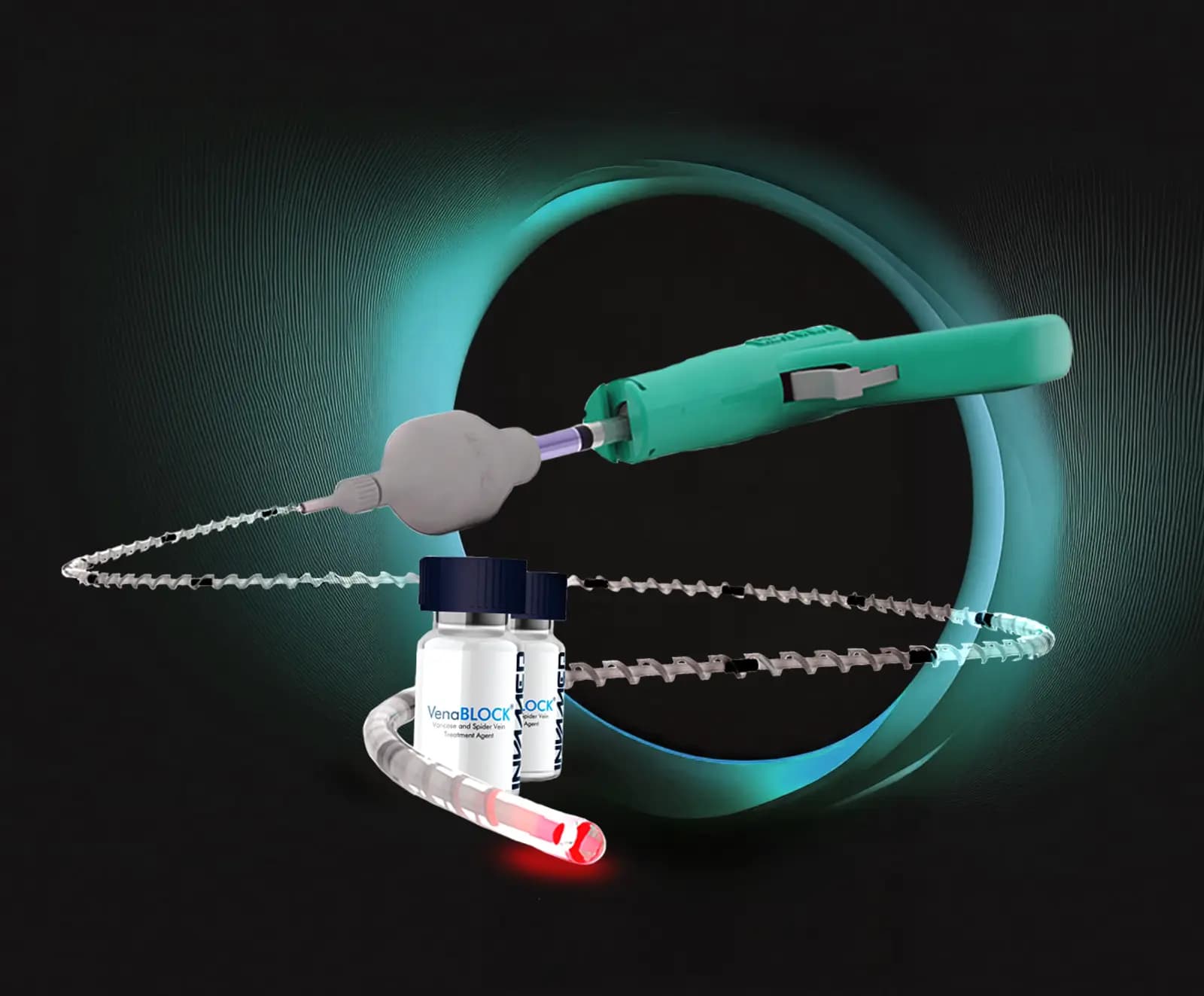
VenaBlock® إغلاق السيانواكريلات · نظام إحكام الأوردة
إغلاق وريدي داخلي غير حراري
يحمل الإغلاق بالغراء السيانواكريلي توصيةً من الفئة IIa بمستوى أدلة A في إرشادات ESVS 2022، حين تُفضَّل التقنية غير الحرارية وغير المتورمة.
لماذا الإغلاق غير الحراري
تقنية الإيصال المستمر
إيصال مستمر ومتحكم به للسيانواكريلات أثناء سحب القسطرة تحت توجيه الموجات فوق الصوتية دوبلكس، مع ضغط خارجي فوري على المقطع المعالج.
لا طاقة حرارية
لا تُولَّد حرارة في أي مرحلة، مما يتجنب هيكلياً إصابة الأعصاب الحرارية وحروق الجلد المرتبطة بالليزر والترددات الراديوية.
لا تخدير تورمي
تخدير موضعي في موقع الدخول فحسب. وفق بروتوكولات دراسة VenaBlock® المنشورة، تنقّل المرضى في اليوم ذاته ولم يكن ارتداء جوارب الضغط إلزامياً.
المزايا
تقنية الإيصال المستمر
إيصال مستمر ومتحكم به للسيانواكريلات أثناء سحب القسطرة تحت توجيه الموجات فوق الصوتية دوبلكس، مع ضغط خارجي فوري على المقطع المعالج.
لا طاقة حرارية
لا تُولَّد حرارة في أي مرحلة، مما يتجنب هيكلياً إصابة الأعصاب الحرارية وحروق الجلد المرتبطة بالليزر والترددات الراديوية.
لا تخدير تورمي
تخدير موضعي في موقع الدخول فحسب. وفق بروتوكولات دراسة VenaBlock® المنشورة، تنقّل المرضى في اليوم ذاته ولم يكن ارتداء جوارب الضغط إلزامياً.
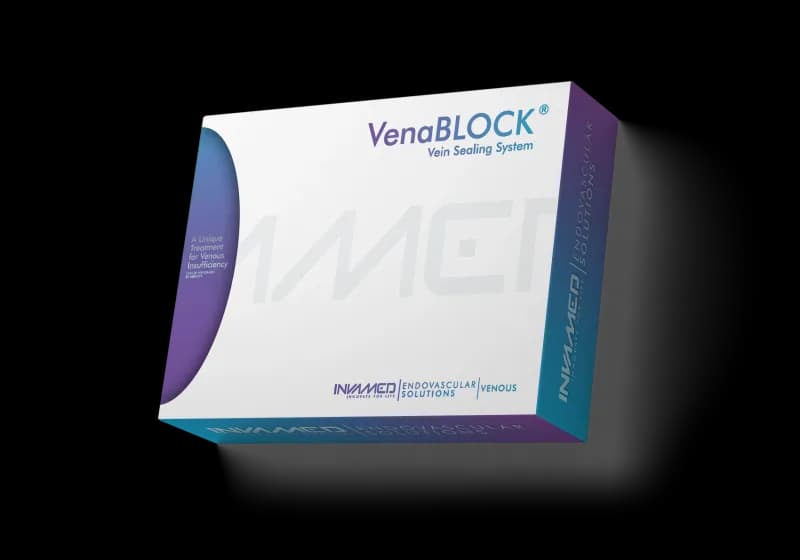
موثق في الأدبيات الخاضعة للمراجعة العلمية.
تُنشر نتائج VenaBlock® في دراسات استباقية وكبيرة المجموعة في مجلات الأوعية الدموية المفهرسة — لا في مطالبات تسويقية.
المصادر: Eroglu et al., Vascular 2018 (n=538); Linn, Yap et al., Phlebology 2021 (RIVIERA، 39 طرفاً). نتائج لوحظت في دراسات سريرية؛ قد تتفاوت النتائج الفردية.